
Rates and payment guide
How Melbourne Airport Parking Rates Add Up
Drive-up pricing looks confusing until two things click: the rates are time-based, and the clock runs on a 24-hour cycle from the moment you enter. This guide covers drive-up rates, the billing rule, cashless payment, and where to pay if you have left it late.
Three things decide what you pay
Before you look at any number, separate what you can control from what you cannot. Duration you can plan. The billing cycle you can only work around. The payment method decides how fast you clear the exit gate.
Ask the parking team a question- 01
-
How long the car sits there
Rates are charged by time rather than quoted as one flat price, so a weekend away and an afternoon meeting are priced from completely different figures. Bring your actual itinerary with you.
- 02
-
Where your entry time falls
The billing clock starts at the entry gate, not at midnight. Enter late in the afternoon and leave the next morning, and you are still inside a single 24-hour block.
- 03
-
Whether you booked or drove up
A pre-booked product fixes your price and hands you a QR code for the gates. Drive-up entry keeps you flexible but leaves you on the published time-based rates.
Drive-up rates are published, not secret
Melbourne Airport keeps a dedicated page for its drive-up rates. It sits inside the live parking information, and it is the reference point to use when you are arriving without a booking. Charges are laid out as time-based amounts instead of one advertised quote, so the figure you pay follows the length of your stay.
Read that page with your real itinerary open in front of you. A vague sense of "about a day" will not get you to a useful number, and the difference between a short stay and an overnight is where most estimates go wrong.
If you are weighing driving up against booking ahead, the same published rates are the honest comparison point. Nothing about them is hidden — they simply respond to duration rather than to a headline price.
Reading the rate page
- Check the published figure against your own arrival and departure times, not against someone else's trip.
- Note the short-stay minimum before you assume a quick stop is priced like a full day.
- Compare the drive-up total with the pre-booked rate for the same product before you decide.
The billing rule
The clock starts when the car enters, not at midnight.
Airport parking rates are calculated on a 24-hour basis from the time of entry. That single sentence explains most of the surprises travellers report on the way out of the gate. Nothing resets overnight; your own arrival time is the anchor.
The 24-hour basis, explained properly
This rule applies across the car parks rather than to one product only. It is the reason partial-day parking can still be charged as a full period, and it is easy to plan around once you have seen it in your own timeline.
The safe habit is simple: write your entry time down, add the hours you expect to be away, and check whether the total tips past the same clock time two days later.
A worked example
Two stays, same car park, same product — the only difference is where the exit lands on the cycle.
-
In at 4pm Monday, out at 2pm Tuesday
Twenty-two hours. You are inside one 24-hour block, so the charge follows that single period.
-
In at 4pm Monday, out at 6pm Tuesday
Twenty-six hours. You have tipped past the twenty-four and into the next period, even though you only added four more hours of parking.
That second stay is the one people remember as unfair. It is not a penalty — the exit simply crossed a boundary that was set when the car went in.
Where it applies
Across the car parks, on the published time-based charges.
What it is not
A nightly reset. Your entry time, not the calendar date, drives the count.

Why short stays have their own minimums
The drive-up rates page shows short-stay minimums, including a 0–15 minute window at $0. That figure is built for genuine short stops: collecting an arriving passenger, dropping someone at the kerb, or a quick handover at the terminal door.
It is not a free parking window for the terminal. Fifteen minutes covers a pickup loop, and the Wait Zone handles that job separately anyway. Treat the minimum as a courtesy for a moving car, not a bay to leave yours in.
Cashless at the car parks — and what to do if you only carry cash
Payment at Melbourne Airport parking is cashless. Card is the default at the payment points, and mobile wallets including Apple Pay and Google Pay work the same way when they are set up and funded on your device. That applies at exit, so nothing you planned changes between the gate you entered and the gate you leave through.
Before you leave home
Travelling with only notes and no card? Sort out a payment method before you drive in. Reaching the entry gate with cash and no alternative turns a routine airport run into a long morning.
Card at the payment points
The everyday route. Tap or insert at the payment point before you walk back to the car, and the exit gate reads the payment on the way through.
Apple Pay and Google Pay
Mobile wallets behave like a card at the machine, provided the wallet is set up on your phone and the linked card has funds. Nothing extra to register at the airport.
Paying with cash
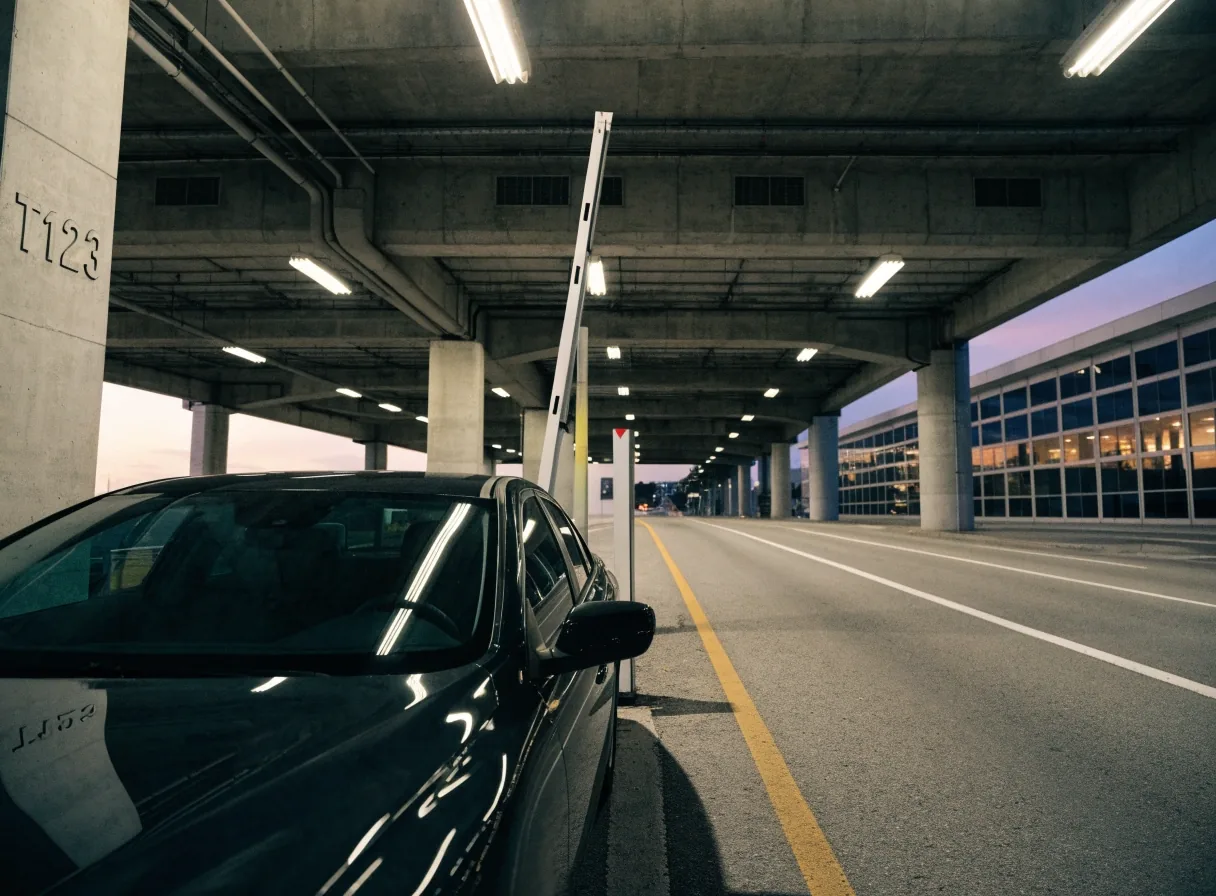
Cash is possible, but only through a specific route: the Last Chance to Pay machines at the T123 Transport Hub. It is a recovery option rather than a normal payment lane.

The Wait Zone and short drop-offs
The Wait Zone exists for quick drop-offs and pickups, and it is the correct place for those stops. It is not a parking bay. Leaving the car there while you walk into the terminal creates a problem for everyone behind you, and it will not end well for your own trip either.
Anything longer than a genuine kerbside stop belongs in a car park — pre-booked or drive-up. Separating those two jobs is the single cheapest decision you can make on arrival day.
Last Chance to Pay machines
If you have parked and reached the exit gate without paying, the T123 Transport Hub hosts machines for cash payments. They are the airport's own recovery route for exactly this situation — a genuinely useful safety net, and not a plan to build your morning around.
Paying on the way out takes longer than paying before you walk back to the car. If you know you will need cash, budget the extra time rather than discovering the queue at the gate.

- Where
- T123 Transport Hub, on the terminal precinct.
- Who it is for
- Drivers who have reached the exit without paying and need to settle with cash.
- Plan for
- A longer exit than usual. Paying at the payment point beforehand is the quicker path.
Pre-booking versus paying at the gate
Both routes are legitimate — they simply suit different trips. Pre-booking through the official portal locks in your product and produces a QR code for entry and exit. Driving up keeps you flexible, but leaves you on the published time-based rates and, at peak times, competing for a space.
Pre-booked through the official portal
- Your product and price are fixed before you travel, which makes the trip budget an actual number rather than an estimate.
- A QR code arrives in your confirmation and operates both the entry and the exit gate.
- Sensible for a flight booked weeks ago, when the dates are already settled and you can plan around them.
Drive-up on the day
- Flexibility to arrive whenever the day allows, with no booking window to respect.
- You carry the time-based rates yourself, including anything that crosses a 24-hour boundary.
- At peak periods the car parks can fill, and a booked driver has a space reserved for them.
Genuinely unplanned airport runs still work: the rates are published and you can read them before you leave home.
Working out your own estimate
Take your entry time, add the hours you expect to be away, and check whether the total crosses a 24-hour boundary. Then hold that number next to the pre-booked rate for the same product. The gap between the two is the real cost of not booking.
Be honest about the return leg. If your flight lands at 10pm and you are collecting bags, assume you will leave the car park around 11pm — not at five past ten.
-
Write down the entry time
The gate records it, and it is the anchor for everything else. Rounding it off in your head is how estimates drift.
-
Add the realistic duration
Include the time between landing and getting back on the road: bag collection, the walk to the car, and the drive out of the precinct.
-
Check the 24-hour boundary
If your total passes the same clock time on the following day, you are into the next period and the estimate moves with it.
-
Hold it against the pre-booked figure
Same product, same dates, one price fixed and one driven by the clock. That comparison is the decision.
Booking lead times and what you need
The portal accepts bookings up to 12 months ahead, and bookings must be made at least 2 hours before arrival. Have your flight details, terminal, entry time and expected return ready before you start, because the flow moves quickly once payment is taken and your confirmation carries the QR code that operates the entry and exit gates.
Parking rate questions, answered
The five questions travellers ask most about Tullamarine parking payment and the 24-hour basis. If yours is not here, the parking team can answer it directly.
Call parking supportHow are Melbourne Airport parking rates calculated?
Rates are calculated on a 24-hour basis from the time of entry. That applies across the car parks, so a stay that crosses a 24-hour boundary is charged into the next period.
Is there any free parking at Melbourne Airport?
The drive-up rates page shows a short-stay minimum of 0–15 minutes at $0. That covers genuinely brief stops. There is no free long-stay parking, and the Wait Zone is for quick drop-offs and pickups only.
Can I pay with cash at the car park exit?
Car park payment is cashless. If you need to pay cash, Last Chance to Pay machines are located at the T123 Transport Hub.
Do Apple Pay and Google Pay work?
Yes. Mobile wallets work alongside cards at the payment points, provided they are set up and funded on your device.
Can I book parking less than 2 hours before arrival?
No. The official booking portal requires bookings to be made at least 2 hours before arrival. Inside that window, drive-up rates apply.
Sort the payment before you drive in
Understanding the rates takes a few minutes at home and saves the version of the morning where you are reading a payment machine with a flight to catch. Compare the products, check what your own dates come to, and book ahead when the trip is already planned.
- Phone
- +61 3 9297 1600
- [email protected]
- Parking team
- Open 24 hours, 7 days a week